
Porn Addiction Help Part 3: Three Resourceful States
When asked, what you need to overcome a pornography habit, what would you say?
Most people answer with some version of, ‘I need more willpower, better self-control, and less temptation” Some unmarried people believe everything will change once they get married. Which rarely happens.
You see, even though those answers sound reasonable, yet they all focus on fighting the symptom rather than understanding the cause and replacing it. And here is an important thing to understand,
Whenever imagination and will are in conflict, imagination always wins. i.e if the mind is imagining something it wants to stay away from, and will power is stopping – soon or late imagination will take over.

As an NLP Master trainer, I like to take a different approach.
Instead of asking what you need to avoid, I would ask what you need to build. That simple shift changes the entire conversation.
Every repeated behavior exists because, at some level, it is serving a deeper need for the person. The question is not whether the behavior is helpful or harmful. The question is, what need it is trying to satisfy?
Although everyone’s experience is different, I have found that many unmarried men who struggle with pornography are missing one or more important, resourceful states. Once these states become part of everyday life, the habit often becomes less necessary because the emotional need it was attempting to satisfy is being met in healthier ways.
Resourceful State One: Alert Calm
Many unmarried men spend most of their day switching between two extremes. They are either under pressure or completely exhausted. Work demands their attention. Financial concerns occupy their thinking. Family expectations sit quietly in the background. Even when nothing dramatic is happening, the nervous system rarely gets a chance to settle.
Alert calm is different.
Think of an experienced pilot during turbulence or a skilled surgeon in the operating theatre. They are fully alert, completely focused, and yet remarkably calm. They are not driven by panic. They are driven by competence.
This is a resourceful state that can be developed.
When you spend more time in alert calm, you no longer feel an urgent need to escape your experience. You remain present with it. You think more clearly. Decisions become easier because your mind is no longer searching for immediate relief.
Many people confuse this with relaxation. It is not the same thing. Relaxation can feel passive. Alert calm is active. It is calmness combined with capability.
Resourceful State Two: Connection
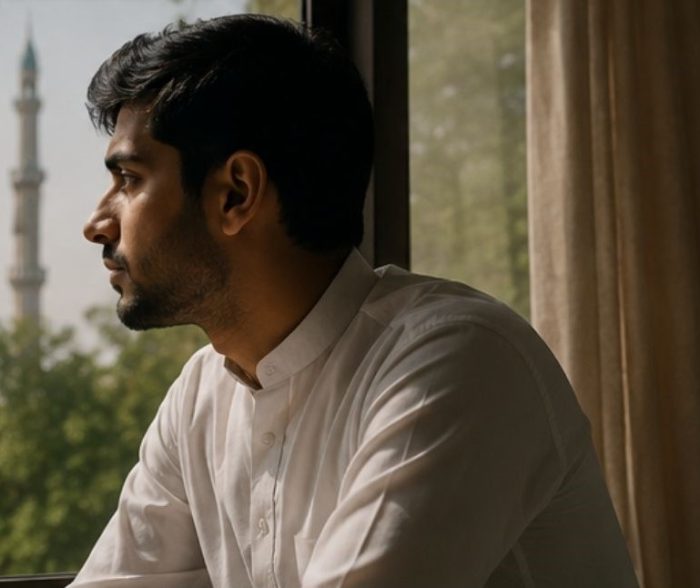
Loneliness is not simply the absence of people. A person can be surrounded by friends and still feel deeply alone.
Real connection is the experience of being understood, accepted and able to be yourself without constantly managing how others see you.
Many unmarried men carry struggles they never discuss with anyone. They maintain an image of being fine while privately dealing with disappointment, uncertainty or shame. Over time, that emotional isolation creates a need for relief.
Pornography can temporarily imitate connection, but imitation is not the same as the real experience. The mind may receive a brief sense of comfort, yet the deeper need remains unmet.
For many men, genuine connection begins long before a relationship. It begins with becoming honest with yourself.
When you can acknowledge what you are feeling without judging yourself, you create the possibility of building authentic relationships with others.
The more genuine connection becomes part of your life, the less attractive artificial substitutes tend to become.
Resourceful State Three: Grounded Presence
Many people spend their lives somewhere other than where they are.
Part of the mind is replaying yesterday. Another part is worrying about tomorrow. Marriage. Career. Finances. Expectations. Regrets. Plans.
Very little attention remains for the present moment.
Grounded presence is the ability to bring your awareness back to what is happening now. It is not about emptying the mind or pretending problems do not exist. It is about becoming fully engaged with the life that is actually in front of you.
One interesting observation is that when people are completely absorbed in meaningful activity, the urge to escape often disappears for that period of time.
Whether they are learning, exercising, creating, serving others or having a meaningful conversation, the mind is no longer searching for another place to go.
Presence reduces the need for escape because, in that moment, there is nothing to escape from.
Why These States Matter
In NLP, we often help people develop resourceful states before we ask them to change a behavior.
There is a simple reason for this.
People rarely make their best decisions when they feel overwhelmed, disconnected or emotionally depleted. Notice your own experiences and I can bet,

You make better decisions when you’re feel good and resourceful; on the other hand the decisions you regret are often the ones you made while you were feeling bad.
The unconscious mind learns through experience and repetition. Each time you experience alert calm, genuine connection or grounded presence, you are teaching your mind that there are healthier ways of meeting your needs.
Gradually, like old worn-out shoes, the old strategy becomes less necessary. It will not disappear overnight.
Since everyone is unique, I am not saying these three states explain every person’s experience. However, resourceful states often remove some of the emotional conditions that keep the pattern alive.
A Simple Exercise
Over the next week, ask yourself a different question.
- Which of these three resourceful states is least available in my life?
- Do you spend most of your day under pressure without ever experiencing alert calm?
- Do you long for genuine connection while pretending everything is fine?
- Do you live almost entirely in your thoughts instead of the present moment?
Don’t try to change all three. Start with one.
Small, repeated experiences teach the unconscious mind far more effectively than dramatic promises ever will.
The Women’s Version Is Different (But The Framework Is The Same)
Before we move to what married men experience, it’s important to understand that unmarried women experience this pattern differently.
The three emotional states they’re missing are similar, but the context is completely different. The shame, the secrecy and the cultural pressure is different.
That’s why the next posts in this series are segmented by audience.
Because your situation is specific. And the pattern shows up differently depending on who you are.

Build These States:
Access the Training
Understanding these three emotional states intellectually is useful. But the real shift happens when you actually learn to access them. When you can generate alert calm on demand.
When you know how to drop into grounded presence. When you can build genuine connection. These are skills. They’re not things you’re either born with or without.
Learn the Skills Behind Lasting Change
Reading about these ideas is only the beginning. Lasting change comes from developing new mental and emotional skills and practicing them consistently.
Inside the NLP Pakistan Membership, you’ll learn practical NLP models, guided exercises and state-building techniques that help you recognize automatic patterns and replace them with healthier, more resourceful strategies.
You can explore everything with a free 48-hour trial and decide whether it’s right for you.

About NLP Pakistan
NLP Pakistan is a subsidiary of The First Institute of Dynamic Learning, LLC (USA)
At NLP Pakistan, led by Master Trainer Kamran Sultan with over 30 years of experience and 37,000 training hours, these skills are taught in Urdu and English through immersive programs. Dr. Richard Bandler himself has endorsed Kamran Sultan’s work.
Our training programs are grounded in real-world applications of NLP refined over 3 decades, not abstract theory. Whether you attend the three-day NLP Bootcamp or the full 21-day NLP Practitioner program, or 27 days NLP Master Practitioner training you gain tools you can use immediately to improve relationships at home, work, and in every area of life.