

Many people ask about the difference between NLP and hypnosis. This post will answer your question.
NLP and hypnosis both influence how people think, feel, and behave, but they take different approaches. Hypnosis traditionally involves guiding someone into an altered state of consciousness (often called a trance) to increase suggestibility. NLP, or Neuro-Linguistic Programming, focuses on language and communication techniques to identify and replicate useful thought patterns, and it can work without any formal hypnotic induction.
People often encounter these two approaches side by side in personal development, therapy, and coaching. They share a common interest in how the mind creates change, and many practitioners study both. Yet they are not interchangeable. Understanding the difference can help you choose the approach that best fits your goals, your learning style, and the kind of change you want to make.
What Is NLP?

NLP stands for Neuro-Linguistic Programming. It is a practical method for understanding how thoughts, language, and patterns of behavior connect. Instead of placing someone into a trance, NLP focuses on extracting thought patterns from one person and teaching others to replicate those structures. That can include how to think, how to learn, or how to overcome fears.
NLP operates primarily at the conscious and behavioural level. That makes it a very practical discipline: clients stay mentally engaged and learn specific techniques they can apply in real situations. Because NLP uses language and communication techniques to influence thought and behaviour, it is often described as a toolbox for changing how people respond to the world around them.
What Is Hypnosis?
Hypnosis is traditionally understood as a practice that involves putting people into an altered state to make them more suggestive. In a typical session, a practitioner uses a formal induction to guide the client into a trance-like state. Once the client is in that state, the practitioner can offer suggestions intended to shift habits, beliefs, or emotional responses.
Hypnosis works primarily at the unconscious level, which is where the patterns driving our thoughts and behaviors tend to live. The conscious mind recedes a little during trance, allowing the unconscious to become more receptive to new ideas. This is why hypnotherapy can feel quite different from ordinary conversation: the entire session is shaped around entering and using that altered state. There is a lot of information about hypnosis and how to learn it on Hypnosis Pakistan website.
Key Differences Between NLP and Hypnosis
The clearest way to understand the difference is to compare how each practice approaches change. The table below summarizes the main contrasts.
Aspect | Hypnosis | NLP |
|---|---|---|
Primary state | Altered trance state | Conscious and behavioural level |
Getting started | Requires formal induction | Bypasses induction and gets to work |
Main methods | Suggestion and metaphor | Suggestion, metaphor, and a broader range of tools |
Engagement style | Receptive and passive | Active engagement |
Core focus | Increasing suggestibility | Replicating useful thought patterns |
A major difference between NLP and Hypnosis is the starting point. Tradition hypnosis requires a formal induction to enter a trance-like state, whereas NLP bypasses the induction and gets straight to work. In an NLP session, the practitioner can immediately begin identifying language patterns, beliefs, and thinking strategies without waiting for a trance state to develop.
Another important difference between NLP and Hypnosis is the level of engagement. NLP involves active engagement from the client, while hypnosis typically asks the client to become receptive and passive. Both can create meaningful change, but they ask different things from the person experiencing them.
Dr. Richard Bandler on the Difference Between NLP and Hypnosis
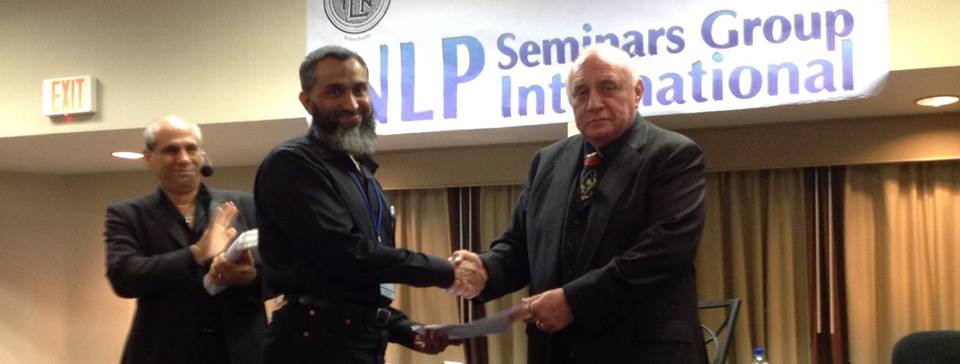
In an interview Kamran Sultan – Master trainer of NLP asked Dr. Richard Bandler, the co-creator of NLP about the difference between NLP and Hypnosis. Dr. Bandler described hypnosis as a practice that traditionally involves putting people into an altered state to make them more suggestive. NLP, on the other hand, focuses on extracting thought patterns from one person and teaching others to replicate those structures, such as how to think, learn, or overcome fears, he explained.
Bandler also explained that he views hypnosis as an augmented tool to facilitate NLP. He noted that the two fields are deeply interwoven in his work. In other words, hypnosis is not the same as NLP, but it can serve NLP when used intentionally. The full interview is available on YouTube.
How NLP and Hypnosis Complement Each Other
Now that you know the difference between NLP and Hypnosis, you may want to know how that both NLP and Hypnosis share a common goal: harnessing the power of the mind for personal transformation. Both disciplines use suggestion and metaphor, and both recognize that language shapes inner experience.
NLP employs a broader range of techniques compared to hypnosis. While both utilize suggestion and metaphor, NLP incorporates additional tools drawn from language patterns, modelling, and communication strategies. This means an NLP practitioner can work across many different situations, from improving confidence to building better communication skills.
Hypnosis can support NLP by creating a deeply receptive state. In that state, the suggestions generated through NLP work may land more powerfully. At the same time, NLP can make hypnosis more precise by identifying which thought patterns deserve attention in the first place. Many practitioners combine the two: using NLP to map the pattern and hypnosis to help the client absorb the new response.
Which Approach Should You Choose?
The right choice depends on your goals and preferences. Hypnosis is well suited to people who respond to deep relaxation and guided suggestion. NLP suits people who prefer active engagement, clear techniques, and practical exercises they can use in daily life.
Because NLP is primarily a conscious and behavioural approach, it can be learned and applied by almost anyone. The techniques are teachable: once you understand how a useful pattern is structured, you can replicate it for yourself. Hypnosis, by comparison, often depends more on the rapport between practitioner and client.
Although there is a clear difference between NLP and Hypnosis, they complement each other exceptionally well. In fact, hypnosis is often used alongside NLP because it can accelerate learning, reduce resistance, and help new patterns become more deeply integrated. For this reason, our NLP training includes hypnosis as part of the curriculum, giving students the ability to use both approaches when appropriate.
You Will Learn Both NLP & Hypnosis in NLP Pakistan Courses
If you want to improve the way you communicate, think, influence, and create lasting personal change, learning NLP gives you a practical set of skills you can use every day. You’ll not only understand the difference between NLP and Hypnosis, but you’ll also discover how the two approaches complement each other. Because hypnosis can accelerate the process of change, you’ll learn practical hypnosis techniques alongside NLP, giving you more tools to help yourself and others achieve results more quickly. You can begin learning in Urdu or English and explore the training with a free 48-hour trial before deciding whether it’s right for you.

About NLP Pakistan
NLP Pakistan is a subsidiary of The First Institute of Dynamic Learning, LLC (USA)
At NLP Pakistan, led by Master Trainer Kamran Sultan with over 30 years of experience and 37,000 training hours, these skills are taught in Urdu and English through immersive programs. Dr. Richard Bandler himself has endorsed Kamran Sultan’s work.
Our training programs are grounded in real-world applications of NLP refined over 3 decades, not abstract theory. Whether you attend the three-day NLP Bootcamp or the full 21-day NLP Practitioner program, or 27 days NLP Master Practitioner training you gain tools you can use immediately to improve relationships at home, work, and in every area of life.
Frequently Asked Questions
Does NLP use hypnosis?
NLP does not require hypnosis, but the two are deeply connected. NLP bypasses formal induction and can work entirely through language and communication techniques. Dr. Richard Bandler describes hypnosis as an augmented tool to facilitate NLP, meaning practitioners may choose to combine them. For many people, the answer depends on the practitioner and the situation.
Which is better, NLP or hypnotherapy?
Neither is objectively better. Hypnosis works at the unconscious level through trance and suggestion, which suits people who respond well to altered states. NLP works at the conscious and behavioural level with active engagement and replicable techniques. Many people benefit from both. Choosing one often comes down to personal learning style, the issue being addressed, and the practitioner’s approach.
Can NLP and hypnosis be used together?
Yes. Many practitioners combine them, and Dr. Richard Bandler has said the two fields are deeply interwoven in his work. Hypnosis can create a receptive state that makes NLP suggestions more powerful, while NLP can identify the specific thought patterns that hypnosis should target. This combined approach is common in practitioner trainings that cover both disciplines.
Is formal hypnosis required for NLP?
No. NLP bypasses the induction and gets straight to work. A practitioner can use language patterns, modelling, and communication techniques to influence thought and behaviour without ever placing the client in a trance. Formal hypnosis is one option, not a requirement. This is one of the clearest practical differences between the two fields.
If you are curious about how NLP can change the way you think, learn, and communicate, the best next step is to try it for yourself. NLP Pakistan offers a free 48-hour trial so you can experience the training and see whether NLP fits your goals. With courses available in Urdu and English, and training led by a Master Trainer endorsed by Dr. Richard Bandler, it is a practical starting point for your personal and professional growth.