

Have you ever walked into a meeting feeling ready for anything, only to have a single comment collapse your confidence? Have you noticed how a particular song, smell, or place can change your mood in seconds?
That is anchoring at work. Anchoring is one of the most direct NLP techniques for managing your emotional states. It links a specific trigger, such as a touch, a word, or a breath, to a resourceful feeling you can access whenever you need it.
If you want to learn how to master anchoring, why your states matter, and how to anchor your own states for confidence, calm, and clarity, this post is for you.
What Is Anchoring in NLP Techniques?
Anchoring is a process of linking a trigger to a state. A state is your overall inner condition at any moment: your thoughts, feelings, posture, breathing, and focus. When you feel confident, you are in a confident state. When you feel anxious, you are in an anxious state. These states shape how you speak, how you listen, and how you respond.
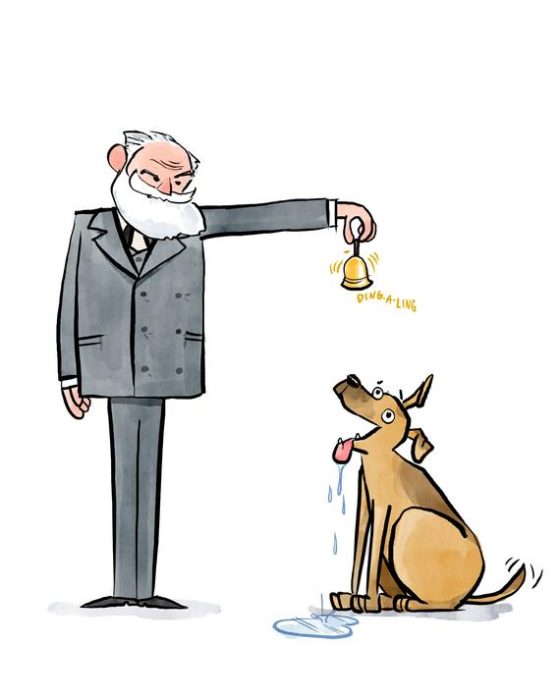
An anchor, then, is any stimulus that reliably brings back a state: a physical touch, a word, an image, or a deep breath.
The process works because your brain naturally connects events that happen at the same time. If you repeatedly feel a surge of confidence while pressing your thumb and finger together, the gesture itself can trigger that feeling on its own.
You have already created anchors without knowing it. A song from your school days can flood you with nostalgia. The smell of certain food can remind you of someone you love. These are naturally occurring anchors. NLP techniques take this ordinary process and make it deliberate: you decide which state you want and which trigger will call it forward.
Why Your Emotional States Matter
Your results in life are shaped by the quality of your states. When you are in a resourceful state, problems look solvable, conversations flow, and decisions feel clear. When you are in an unresourceful state, the same problem can feel overwhelming and the same conversation can feel impossible.
State management, resilience, clear thinking, and the ability to influence yourself and others are not soft skills you add at the end of your training. They are the operating system underneath every decision you make. Once you understand this, you stop trying to change your behavior directly and start changing the state that drives your behavior.
This is why NLP is described as being about choice: noticing what works, identifying what doesn’t, and creating a path forward through intentional change. Anchoring lets you make that choice in the moment. Instead of hoping you feel confident before a presentation, you can create the feeling deliberately.
How to Anchor Your Own States
Anchoring your own states is something you can learn in minutes, but it takes practice to master. Here is the process I teach in NLP training, in steps you can use today.
Step 1: Choose the State You Want
Get specific about the state you want to anchor. Do not settle for a vague word like confident or calm. Ask how that state would show up in your body. What would you see, hear, and feel when you are in it? The clearer your target, the easier it is to recreate. If you want confidence for a specific situation, name that situation as you work.
Step 2: Access a Strong Memory of the State
Recall a time when you felt that state fully and naturally. Close your eyes if it helps and step back into that memory as if you are there again. Use imagery training, sometimes called mental rehearsal, to make the memory vivid. What did you see, hear, and say to yourself? The more sensory detail you bring in, the stronger the experience becomes.
Step 3: Intensify the Feeling
Now amplify the feeling. Make the colors brighter, the sounds closer, the sensations stronger. Notice where the feeling lives in your body. If it is small, let it expand. If it is slow, speed it up. This is the moment when the state reaches its peak intensity, and it is the moment you want to capture with your anchor.
Step 4: Set the Anchor
At the peak of the feeling, apply a unique stimulus and hold it for a few seconds. A good anchor is something you can repeat easily in real life: pressing your thumb and first finger together, touching your wrist, or taking a slow breath. Make sure it is not something you do casually, so the anchor stays distinct.
Step 5: Test and Refresh
Break your state completely. Look away, stand up, shake your hands, or think about something neutral. After a few moments, fire the anchor: repeat the same stimulus. If the feeling starts to come back, your anchor is working. If not, go back to the memory, intensify the feeling further, and repeat the process. The more you practice, the faster and stronger the response becomes.
The Benefits of Anchoring Your Own States
Once you can anchor your own states, you carry a tool with you that works in almost any situation. Here are the benefits I see most often in NLP training:
Confidence on demand. You can call it up before a meeting, presentation, or difficult conversation.
Calm in high-pressure moments. A steadying anchor brings you back to center when your heart is racing and your thoughts are scattering.
Clearer communication. In a resourceful state, you listen better, choose your words better, and respond instead of reacting.
Greater resilience. State management helps you recover more quickly from setbacks, rejections, and unexpected challenges.
More choice. NLP is ultimately about choice, and anchoring gives you a practical way to choose your state instead of being a victim of your circumstances.
These benefits apply across your personal and professional life. In the workplace, NLP is widely used in areas like HR, leadership, and sales. The person who can manage their own state stays composed in a crisis and inspires confidence in others.
Other NLP Techniques to Explore
Anchoring is one of the top NLP techniques for improving personal performance, but it is not the only one. These related techniques work well alongside it:
The Meta Model. A set of questions that uncovers the hidden assumptions and vague language in the way people talk.
Mirroring. Building rapport by subtly matching the other person’s body language, tone, and pacing.
Framing. Changing the meaning of an experience by placing it in a different context.
Pattern Interruption. Breaking a repetitive, unhelpful thought or behavior pattern so you can choose a new direction.
Imagery training. Mental rehearsal using visualization to prepare for future performances and conversations.
Each technique is valuable on its own, but together they form a connected system. Reading about anchoring is a good start. Practicing it under the guidance of an experienced trainer is what turns knowledge into skill.
Common Mistakes When Using Anchoring
Anchoring is simple, but it is easy to do it poorly. Watch out for these common mistakes:
Using a weak memory. If the memory does not genuinely produce the feeling, the anchor will be weak. Spend more time building the feeling before moving on.
Setting the anchor too early or too late. The stimulus needs to fire at the peak, not before the feeling builds and not after it fades.
Failing to test. If you never break state and test the anchor, you will not know whether it works.
Using the same trigger for everything. If one gesture becomes the anchor for many states, it loses its power
Giving up after one attempt. Anchoring improves with repetition. A single session is rarely enough.
Be patient with yourself. Like any skill, anchoring your own states takes practice before it feels natural. The effort is worth it because the result is a resource you can use for the rest of your life.

About NLP Pakistan
NLP Pakistan is a subsidiary of The First Institute of Dynamic Learning, LLC (USA)
At NLP Pakistan, led by Master Trainer Kamran Sultan with over 30 years of experience and 37,000 training hours, these skills are taught in Urdu and English through immersive programs. Dr. Richard Bandler himself has endorsed Kamran Sultan’s work.
Our training programs are grounded in real-world applications of NLP refined over 3 decades, not abstract theory. Whether you attend the three-day NLP Bootcamp or the full 21-day NLP Practitioner program, or 27 days NLP Master Practitioner training you gain tools you can use immediately to improve relationships at home, work, and in every area of life.
Frequently Asked Questions
Can I really use anchoring on myself?
Yes. Anchoring your own states is one of the most accessible NLP techniques because it does not require another person. Follow the five steps: choose a state, recall a strong memory, intensify the feeling, set a unique trigger, and test it. Self-anchoring is a core skill taught in NLP Practitioner training, and most people feel results in their first session.
How long does an anchor last?
An anchor lasts as long as you keep refreshing it. Like any association, it can fade if never used. Keep it strong by firing it regularly and renewing it with a fresh, intense memory of the state. A well-maintained anchor can serve you for years and becomes faster to access with practice.
What is the best way to learn NLP techniques like anchoring?
Structured training is the most reliable path. NLP Pakistan offers NLP Bootcamp, NLP Practitioner, and NLP Master Practitioner programs taught by Master Trainer Kamran Sultan, whose work is endorsed by NLP co-founder Dr. Richard Bandler. Courses are delivered in Urdu and English and focus on practical skills for personal and professional transformation.
Start Practicing Anchoring Today
You now have everything you need to begin anchoring your own states. The next time you feel a surge of confidence, catch it. Intensify it. Attach it to a trigger you can use anywhere. Then test it, refresh it, and make it yours.
If you want to go deeper, NLP Pakistan has built a training path around practical NLP techniques like anchoring. Master Trainer Kamran Sultan designed the NLP Bootcamp, NLP Practitioner, and NLP Master Practitioner programs to help leaders, entrepreneurs, and professionals use NLP in real life. His work is endorsed by NLP co-founder Dr. Richard Bandler. You do not need years of theory. You need a proven process and the support to practice it.
Start with the free 48-hour trial and see how these NLP techniques feel when you learn them directly. Your states are the foundation of everything you do. Learn to anchor them, and you will never walk into a room hoping to feel ready again.